Illumination: How the Visual Captures the Imagination (Senate House Library, London 28 Sept – 19 Dec 2015)

Illumination: How the Visual Captures the Imagination
Senate House Library, London

28 Sept – 19 Dec 2015

http://senatehouselibrary.ac.uk/visiting-the-library/exhibitions/illumination/

How do ideas move from the mental to the physical? From centuries old vases and painted canvasses to books and the virtual, creative ideas manifest themselves visually and allow us to understand such diverse worlds as cartography and astronomy to music and philosophy. Artists have drawn inspiration from themes which have transcended time such as the study of the human body and the natural world, to give them physical presence. The earliest printed books contained illuminations and later illustrations in which image and word converged to generate new visual forms for the reader. Technology also impacted on the ability to interpret objects moving from the naked eye to the scientific instruments designed to enhance optics. This exhibition will explore connections between these developments and how the gestation of the creative idea contributes to our understanding of visual culture. The exhibition draws together for the first time materials from Senate House Library with those of all of the Institute Libraries of the School of Advanced Study.

Over the three months, the Illumination Series will host over twenty events: lectures, symposia, workshop and performances which explore aspects of the visual through different disciplinary perspectives to bring new insights into the materials on display in the exhibition and the Library’s wider collections. Admission to the exhibition and events are free. However, due to space limitations, tickets are required for admission for the events. Click on the Eventbrite link for each event for ticket availability. For further information on the exhibition and the Series, contact the Curator and Research Librarian, Colin J.P. Homiski (details on the website).

Topographies: London Group of Historical Geographers Autumn Seminar Series

LONDON GROUP OF HISTORICAL GEOGRAPHERS
Seminar Programme, Autumn 2015
TOPOGRAPHIES
Talks in this series may well be of interest to RIN members. Seminars are held on Tuesdays at 5.15pm in the Wolfson Conference Suite (NB01), Institute of Historical Research, North Block, Senate House, University of London.

For further details please visit the LGHG homepage or the seminar listing on the IRH website.

6 October 2015
Stephen Daniels (University of Nottingham)
“’Map-work”: John Britton and the topographical imagination in nineteenth-century Britain.
20 October 2015
Veronica della Dora (Royal Holloway, University of London)
“And he walked from country to country”: Vasilij Grigorovich Barskij’s pious topographies, 1723–1747.
3 November 2015
William Bainbridge (Paul Mellon Centre for Studies in British Art)
“Mountains run mad”: shared topographies and conflicting memories in the Dolomites.
17 November 2015
Jordan Goodman (UCL)
Making places, knowing lives: Joseph Banks learns Australia, 1770–1810.
1 December 2015Felicity Myrone (British Library)Re-evaluating topography: the case of Captain Thomas Davies’ An east view of the great cataract of Niagara (1762).

Event Report: ‘The Art of Quotation and the Miniaturised Gallery’, RIN 4, Saturday 6 June 2015

The fourth Romantic Illustration Network symposium took place at the House of Illustration on Saturday the 6th of June. Once again the event was well-attended with a friendly mix of regulars and new faces, local and international.house-of-illustration-logo-kids-in-the-halls-column-arts-agency
We had two inter-related themes for the symposium:

1.Miniaturization: Drawing on Peter Otto’s work on virtual culture in the Romantic period, is the illustration a form of virtual gallery? How does visual meaning change when an image is resized?
2.The Art of Quotation: How were literary quotations used to conceptualise visual images? How important are framing devices to the meaning of an image?

However, speakers were free to interpret the terms ‘quotation’ and ‘miniaturised gallery’ in any way they saw fit, and to raise any other questions they chose.

We kicked off with David Worrall (Roehampton/Nottingham Trent) who presented us with his concept of ‘locations of curation’. After crediting William St Clair in RIN 3 for inspiring his quest for a new theory of illustration, Worrall explored what he described as two currently disconnected narratives – Romanticism and eighteenth-century theatre – to consider the changing moments when images interact with other objects, such as the people who view them. He used the example of theatrical portraits to demonstrate how images moved from stage, to page, to prints, to household objects.

Susan Matthews’s (Roehampton) paper interrogated questions of scale, domesticity, and artistic encounter, the idea of ‘meeting’ an artist though their illustrations. She pointed out that the name ‘House of Illustration’ (as opposed to ‘Gallery of Illustration’) is significant: we often seem to want to give illustration a ‘home’. She focused on Fuseli’s illustrations to an edition of Cowper’s popular poem The Task (1785), and revealed the awkward tensions between Fuseli’s depictions of domestic scenes and Cowper’s lines, whilst also showing that Fuseli could produce powerful images on a small scale when he really wanted to. Matthews drew parallels between Fuseli’s techniques and the recent exhibition of Paula Rego’s work at House of Illustration.
urizen_a_p11-17_100

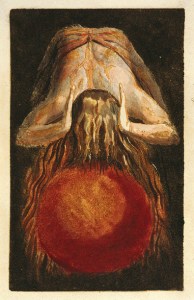
Plate 17, The Book of Urizen William Blake Archive

From here we zoomed in still further, with Peter Otto’s (Melbourne) paper on plate 17 of Blake’s The Book of Urizen (1794). Otto gave a detailed and original reading of the plate which encompassed The Terror and images of decapitation by guillotine, the story of Adam and Eve, Perseus and the Gorgon, and the Narcissus myth to show how the plate connects primal history with events unfolding in the present through an art of visual and textual quotation. He argued that the plate illustrated a turning point in society, represented as a decapitation, and that Blake was constructing an imagined reality through quotation which in turn tries to shape or frame what reality is.

From royal executions to royal collections, Kate Heard (Royal Collection) showed us how George III and George IV both engaged with the reproductive print market, albeit in very different ways, as prints enabled middle-class consumers to gain access to items in the Royal Collection. We saw how Royal Collection items circulated as prints, so much so that satirical caricaturists could imitate them, and she argued that the print market played a crucial role in the public sense of the King. We also saw what a fantastic resource the Collection is for scholars.

Taking us through to the Victorian period, Bethan Stevens (Sussex) spoke about her work on the albums of proofs put together by the dominant mid-century London wood-engraving firm, the Dalziel family. The firm of Dalziel produced the illustrations to a vast range of literary and non-literary texts, including such classics as the Alice books and Tennyson’s Idylls of the King. Stephens showed how, in the albums, the exclusion of words affects the status, form and narrative of illustration, and provokes a new attention to illustrations as images which enables all kinds of subversive and intriguing readings.

Three Bibliographical Society Studentships were awarded: Anne Musset (Warwick/Paris-Diderot), Tessa Kilgariff (National Portrait Gallery/Bristol), and Naomi Billingsley (Manchester). We ended the day, as usual, with a period of open discussion about the broader themes of the event and the future of the network (upcoming ventures include the panel at BARS 2015 in Cardiff and the digitised Shakespeare Gallery, currently under construction). After that we adjourned to the pub, to round off a successful and fun day with a friendly drink.

Details of the BARS panel will be appearing on the blog and website soon: we hope to see you there!
IMG_20150606_180246993IMG_20150606_180306094_HDRIMG_20150606_180236143

REMINDER: RIN 4 Bibliographical Society Studentships, for symposium Sat 6th June, House of Illustration

Reminder: Bibliographical Society Studentships for RIN 4 Saturday 6 June 2015, 10 – 5pm, The House of Illustration, London

We are accepting applications for 3 Bibliographical Society Studentships of £60 each, to assist postgraduate students with attendance. 3 spaces are reserved for the successful candidates.

London-based and non-London based postgraduate students are all eligible: applications will be assessed on the basis of the relevance of your research to the work of the Network and/or the Bibliographical Society.

 See here for details of the symposium.

To apply, please send your CV, and a statement explaining how your research fits with the work of the Network and/or the Bibliographical Society (200 words max), to Mary.Shannon@roehampton.ac.uk by Monday 25th May. Successful candidates will be notified by Wednesday 27th May.

If you have already registered for RIN 4 on Saturday 6th June, please do consider applying.

Birkbeck Arts Week Starts: Monday, 18 May

Birkbeck Arts Week Starts: Monday, 18 May

We start on Monday 18 May with sessions on Curiosity (with Marina Warner and others), Coffee and Commonwealth, illustrator and caricaturist Chris Riddell‘s reflecting on Gulliver’s Travels and Diderot on Monday, to discussions of Ruins, productions of S.T.Coleridge‘s Ancient Mariner and Blake‘s Illuminated manuscript Vala or the Four Zoas, Mike Leigh’s Mr Turner with members of the film team, and we end on Friday with sessions on the enlightenment art of Shadow Portraits and a Magic Lantern Show. And this is just a couple of examples.

Do visit the Birkbeck Arts Week’s webpage, choose your events, and book seats. It’s all free. And please spread the word.
http://www.bbk.ac.uk/arts/about-us/events/arts-week 

REGISTRATION OPEN: RIN 4: The Art of Quotation and the Miniaturized Gallery. Saturday 6 June 2015, 10 – 5pm, The House of Illustration, London

The Art of Quotation and the Miniaturized Gallery. Saturday 6 June 2015, 10 – 5pm, The House of Illustration, London: Peter Otto (Melbourne), David Worrall (Roehampton/Nottingham Trent), Kate Heard (Royal Collection), Susan Matthews (Roehampton), Bethan Stevens (Sussex). Supported by the University of Roehampton and the Bibliographical Society. Organised with the assistance of House of Illustration.

We are delighted to announce that registration for this free event is now OPEN.

You can download the full programme here.

To register, please email Mary.Shannon@roehampton.ac.uk, giving your name, job title, and institution (if applicable). Places will be awarded on a first-come, first-served basis, and there will be a waiting list.

We are also accepting applications for 3 Bibliographical Society Studentships of £60 each, to assist postgraduate students with attendance. 3 spaces are reserved for the successful candidates.

To apply, please send your CV, and a statement explaining how your research fits with the work of the Network and/or the Bibliographical Society (200 words max), to Mary.Shannon@roehampton.ac.uk by Monday 25th May. Successful candidates will be notified by Wednesday 27th May.

RIN 4: The Art of Quotation and the Miniaturized Gallery. Saturday 6 June 2015, 10 – 5pm, The House of Illustration, London

The Art of Quotation and the Miniaturized Gallery. Saturday 6 June 2015, 10 – 5pm, The House of Illustration, London: Peter Otto (Melbourne), David Worrall (Roehampton/Nottingham Trent), Kate Heard (Royal Collection), Susan Matthews (Roehampton), Bethan Stevens (Sussex). Supported by the University of Roehampton and the Bibliographical Society. Organised with the assistance of House of Illustration.

Registration for this event will soon be open: details will be posted on this blog.

We will also be advertising 3 Bibliographical Society Studentships of £60 each, to assist postgraduate students with attendance. 3 spaces are reserved for the successful candidates; details of how to apply will be advertised here soon.

UnivRoehamptonlogo Bib Soc support logo house-of-illustration-logo-kids-in-the-halls-column-arts-agency

Podcasts available: RIN 3, ‘The Literary Galleries’, February 2015, Tate

Podcasts of our third event ‘The Literary Galleries: Entrepreneurship and Public Art’, held at the Tate on February 27th 2015, are now available to listen to and to download on Vimeo here.

The programme for the symposium is downloadable from https://romanticillustrationnetwork.wordpress.com/events/, but the speakers were:

1) Rosie Dias (Warwick), ‘Viewers, Patrons, Readers, Consumers? John Boydell’s Shakespeare Gallery and its Public’

2) Ian Haywood (Roehampton), ‘Macklin’s Poets Gallery and the age of Terror’

3) Luisa Calè (Birkbeck), ‘The Hours’

4) Frederick Burwick (UCLA), ‘Painting and Performance: Tableaux Vivants on the London Stage’

5) Martin Myrone (Tate), ‘Blake and the Limits of Illustration’

Birkbeck History and Theory of Photography Research Centre Events

History and Theory of Photography Research Centre

Events are free and open to all, at 43 Gordon Square, London WC1H 0PD.

Upcoming:
Tuesday 10 March, 6:00-8:00pm
Keynes Library (room 114)
Seminar:

Carol Jacobi (Tate Britain) and Hope Kingsley (Wilson Centre for Photography)

‘Salt and Silver: Early Photography 1840-1860’

Carol Jacobi and Hope Kingsley will be talking about the aesthetics and reception of salted paper prints in the nineteenth-century, and the experience of curating an exhibition of these rare early photographs in the twenty-first.

For other events see the website.

British Museum: Napoleon Exhibition and Events

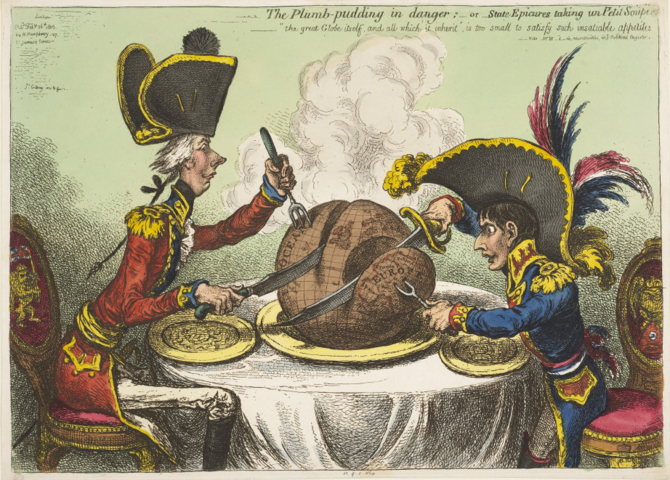
Napoleon caricature BM
©The Trustees of the British Museum

Bonaparte and the British: prints and propaganda in the age of Napoleon

5 February – 16 August 2015

Venue: British Museum
Entry: Free
Address: Great Russell Street, London, Greater London, England. WC1B 3DG

This exhibition will focus on the printed propaganda that either reviled or glorified Napoleon Bonaparte, on both sides of the English Channel. It explores how his formidable career coincided with the peak of political satire as an art form. 2015 marks the 200th anniversary of the Battle of Waterloo – the final undoing of brilliant French general and emperor Napoleon Bonaparte (1769–1821). The exhibition will include works by British and French satirists who were inspired by political and military tensions to exploit a new visual language combining caricature and traditional satire with the vigorous narrative introduced by Hogarth earlier in the century. This exhibition includes work by James Gillray, Thomas Rowlandson, Richard Newton and George Cruikshank.

Download a list of exhibition-related events at the British Museum here.