Home

The HoursRomantic Illustration Network

The Romantic Illustration Network (RIN) restores to view the importance of book illustration and visual  culture in the Romantic period, but also across the Eighteenth and Nineteenth centuries. RIN brings together scholars working on poetry, prose, the printed book, visual culture, and painting from roughly 1750 – 1850 to share research and to develop new models for understanding the relationship between word and image in the period, between large and small scale work, and between painting, print and illustration.

RIN will foreground artists who have been unduly ignored, and return attention to well-known artists in unfamiliar roles. We aim to recapture lost cultures of looking and of reading, restoring the link between word and image not only in book illustration but in the wider literary and visual culture.

Our original programme of events took as starting points in turn the artist, the author, the gallery and the economics of print. We have produce an edited collection of essays and begun to expand the network as the basis for a longer research project. We have launched new partnerships, including with House of Illustration and the University of the Third Age. We are in conversation Tate Britain concerning research that will enhance the Tate’s collection of literary prints and paintings.

Follow us on Twitter at @RomanticIllust1 https://twitter.com/RomanticIllust1 
Recent Posts

Event Announcement! Join Professor Ian Haywood for his talk on Keats and LSD

 (SPOILER ALERT – it’s not the type you think!)

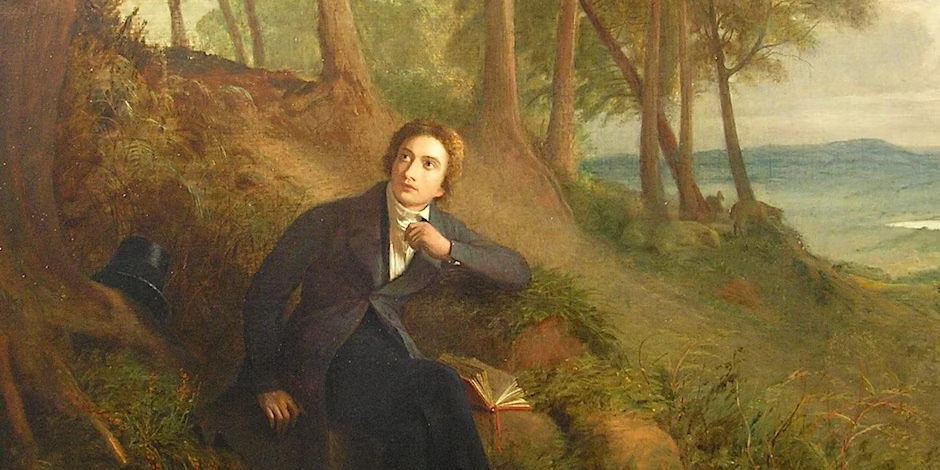
This talk will take a fresh look at one of Keats’s best-known and well-loved poems, ‘On First Looking Into Chapman’s Homer’ (1816). This sonnet, first published in Leigh Hunt’s ‘The Examiner’, marked Keats’s debut as an aspiring poet, and critics have universally praised the poem’s celebration of the joys of reading the classics in translation. Keats was from a humble ‘Cockney’ background and this poem’s frank confession of his literary ambitions and educational limitations is widely admired as a display of Romantic sensibility. However, the perspective of LSD (spoiler alert – it is not what you think) produces a very different interpretation of the poem, and takes us into challenging cultural, geographical and ethical regions, with some profound implications for British Romanticism as a whole. Join Professor Ian Haywood to learn more.

Thu, 27 Mar 2025 18:30 – 20:00 GMT

Keats House10 Keats Grove London NW3 2RR

To book tickets and for more information, please visit: https://www.eventbrite.co.uk/e/keats-and-lsd-tickets-1205517889459

  1. Discovering the Legacy of the the Boydell Shakespeare Prints: A Collector’s Experience Leave a reply
  2. REVIEW: The History of Press Graphics 1819-1921: The Golden Age of Graphic Journalism by Alexander Roob. Reviewed by Katie Snow. Leave a reply
  3. Women Printmakers in the Eighteenth Century: exploring the print and publishing life of Letitia Byrne in Women in Print Leave a reply
  4. “With feelings which I cannot describe”: How Illustrators of Fin-de-Siècle Romance Fiction Depicted Wonders Surpassing Human Description Leave a reply
  5. Printed Afterlives: Joshua Reynolds’ ‘Johnson Arguing’ portrait, 1769 Leave a reply
  6. Introduction, Twitter launch and Call for Contributions 1 Reply
  7. Queen Caroline in Caricature – August 1821 1 Reply
  8. Roehampton Research Seminar, 9 December 2020 1-2pm 1 Reply
  9. Queen Caroline in Caricature -November 1820 2 Replies