CFP: ‘Romanticism and the Arts’ SAMLA, Durham, North Carolina, USA (13-15 Nov. 2015)

Call for Papers
‘Romanticism and the Arts’
an affiliated session of the Keats-Shelley Association of America South Atlantic Modern Language Association Conference
Durham, North Carolina, USA (13-15 Nov. 2015)
Deadline: 15 May 2015

This panel seeks papers related to second-generation Romantic-era British writers and/or their literary circles, so proposals addressing the works of John Keats, Percy and Mary Shelley, Lord Byron, Leigh Hunt, and William Hazlitt will receive priority. Proposals that engage with the conference theme (“In Concert: Literature and the Other Arts”) are especially welcome. Subjects to be considered might include (but are not limited to) Romantic literature in relation to music, concerts, songs, painting, engravings, caricatures, drawings, panoramas, book arts, calligraphy, dance, theatre, opera, architecture, sculpture, china, pottery, ceramics, textiles, and, in later contexts, electronic art, film, and photography.

Please send a 250-word abstract, bio or CV (one page only), and audio-visual requests to Ben P. Robertson, Troy University, (bprobertson@troy.edu) by 15 May 2015.

Third RIN Symposium ‘The Literary Galleries’: REGISTRATION OPEN

Romantic Illustration Network Symposium
The Literary Galleries: Entrepreneurship and Public Art’
Supported by the University of Roehampton, the Bibliographical Society, and Tate Britain

We are  pleased to announce that the third RIN symposium is now OPEN for REGISTRATION.

Friday 27th February 2015, 10am – 5pm
Board Room and Duffield Room, Tate Britain,
Millbank, London SW1P 4RG

This symposium brings together the authors of the key scholarship on the literary galleries of the Romantic period: Fred Burwick (The Boydell Shakespeare Gallery, 1996), Rosie Dias (Exhibiting Englishness, 2013), Ian Haywood (Romantic Caricature, 2013), Luisa Cale (‘Blake and the Literary Galleries’, 2008; Fuseli’s Milton Gallery 2006) and Martin Myrone (Gothic Nightmares, 2006; John Martin: Apocalypse, 2011) in a venue that is itself a form of literary gallery (Tate Britain) to present new research and to debate the relationship of painting to illustration, text, and print.  To what extent did the literary galleries change the role of illustration in the Romantic period?

Registration:

Places are FREE but limited to 15 in total, excluding speakers and organisers. This is due to restricted access to the Print Room. To secure your place, please email Mary.Shannon@roehampton.ac.uk, providing your name, status/job title, and institution (for name badges). Places will be awarded on a first-come, first-served basis and you will receive email notification. However, there will also be a waiting list. If you are unable to take up your place, please NOTIFY US BY EMAIL IN GOOD TIME so that someone else on the list may be offered your place.

We are able to offer 2 postgraduate ‘Bibliographical Society Studentships’ of £60 each to assist with the cost of attending at the symposium. Postgraduate students who live outside London are eligible. To apply, please send a CV and a statement (200 words) to Mary.Shannon@roehampton.ac.uk by Friday 6th February explaining your current research and its relevance to the interests of the Romantic Illustration Network as well as to the aims of the Bibliographical Society. Successful applicants will be notified by Tuesday 10th February.

Subject to permissions, we are hoping to record proceedings for the benefit of those unable to attend.

Programme:
10.00 Registration: meet at Staff Entrance (see map) to transfer to Board Room
10.15
Rosie Dias (Warwick), ‘Viewers, Patrons, Readers, Consumers? John Boydell’s Shakespeare Gallery and its Public’
Ian Haywood (Roehampton), ‘Macklin’s Poets Gallery and the age of Terror’
11.45 tea and coffee
12.15 Luisa Calè (Birkbeck), ‘The Hours’
1-2 Lunch (attendees to make own arrangements)
2.00 Frederick Burwick (UCLA), ‘Painting and Performance: Tableaux Vivants on the London Stage’
3pm Tours of Print Room and Galleries, led by Tate facilitators
4.00 Martin Myrone (Tate), ‘Blake and the Limits of Illustration’
4.45 Open Discussion
5pm Close. Please join us for a drink nearby.

For a full programme and a map of the venue, visit https://romanticillustrationnetwork.wordpress.com/events/

Image of the Month: Mutual undermining by “Boz” and Cruikshank?

Mutual undermining by “Boz” and Cruikshank?

Helen-Frances Pilkington (Birkbeck)

Mary L. Shannon’s paper, at the recent The Artist and the Writer RIN symposium, discussed how Dickens, in the guise of “Boz”, had used Cruikshank’s established visual persona to bolster his own. This led me to think about another “Boz” – Cruikshank relationship from August 1838 in Bentley’s Miscellany, where they had engaged in some mutual under-mining. The sketch in question was the ‘Full Report of the Second Meeting of the Mudfog Association for the Advancement of Everything’ which was ‘illustrated by George Cruikshank’.

Within this article is a discussion on the local beadle. “Boz” was given the chance to state his case first. Mr Sowster, the reader is informed, was a ‘fat man, with a more enlarged development of that peculiar conformation of countenance which is vulgarly termed a double chin.’ After some ‘unconstitutional proceedings’ in which Mr Sowster was employed as a bouncer for the Mudfog meeting, “Boz” announced that he had ‘procured a local artist to make a faithful sketch of the tyrant Sowster’. This likeness was ‘from the life, and complete in every respect. Even if I had been totally ignorant of the man’s real character, and had it been placed before me without remark, I should have shuddered involuntarily. There is an intense malignity of expression in the features, and a baleful ferocity of purpose in the ruffian’s eye, which appals and sickens. His whole air is rampant with cruelty, nor is the stomach less characteristic of his demoniac propensities.’ Such a description evokes terror, potentially comic, especially when considering the satirical trope of beadles.

As noted by Sally Ledger, one of the prototypes for Mr Bumble, the beadle in Oliver Twist (1837-1838), was Robert Seymour’s 1830 engraving ‘Heaven and Earth’ in which a beadle, in a cocked hat, flowing robes and staff, descends from the clouds to deny relief to starving paupers (Figure 1: bottom centre).
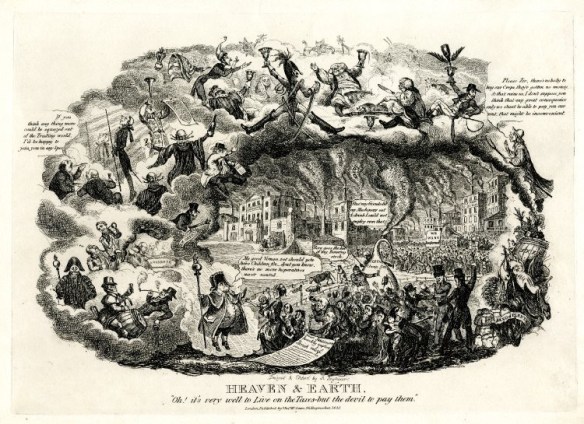
Figure 1: Robert Seymour, ‘Heaven & Earth’, 1830 © British Museum

Ledger noted that ‘this image of the Beadle as a pompously attired, self-important petty official that established a satirical genealogy upon which Dickens and Cruikshank would together build a few years later in Sketches by Boz and Oliver Twist‘. Given the “Boz”-ian text, the date and the article title proclaiming the Cruikshank illustrations, the expectation for the first readers would have been a continuation of this trope. However, the ‘faithful’ sketch by the ‘local artist’ in Bentley’s Miscellany turned out to be quite different (Figure 2):

Figure 2: George Cruikshank, 'The Tyrant Sowster', Bentley's Miscellany (1838) © Victoria and Albert Museum

Figure 2: George Cruikshank, ‘The Tyrant Sowster’, Bentley’s Miscellany (1838) © Victoria and Albert Museum

In Figure 2, Cruikshank has depicted Sowster as a benignly comic figure, all double-chin and belly with little arms and legs attached, rather than the ferocious tyrant per “Boz’s” description or the pompous petty official of the satirical stereotype. So who is right? Is the ‘local artist’ incapable of accurate sketching or has “Boz” been carried away by his rhetoric?

Helen-Frances Pilkington (Birkbeck)

Helen-Frances is a PhD student at Birkbeck focusing on hot air balloons and railways in the early nineteenth century

Sources:

Dickens, Charles; ‘The Second Report of the Mudfog Association for the Advancement of Everything’; Bentley’s Miscellany; 4; (August 1838); 209-227.

Ledger, Sally; ‘From Queen Caroline to Lady Deadlock: Dickens and the Popular Radical Imagination’; Victorian Literature and Culture; 32; (2004); 575-600.
Ashmolean Blake Exhibition: Lectures and Conferences

Members of the Illustration Network might be interested in the upcoming events associated with the Blake exhibition at the Ashmolean.

LECTURES

Towards a New Era in Printmaking: Innovation in the 18th Century With Dr Ad Stijnman FRHistS, private researcher, Ashmolean Lecture Theatre, Friday 16 January, 2-3pm £5/£4 concessions. Printmaking changed dramatically after 1700 with the introduction of new plate-making and plate-printing processes, coloured inks and state of the art print presses. Dr Stijnman looks at this era in which artists, printers, engravers and publishers produced work that astonished audiences. BOOK NOW AT http://www.ashmolean.org/exhibitions/whatsontickets/

Reading in the Spirit of Blake With Saree Makdisi, Professor of English and Comparative Studies at UCLA Ashmolean Lecture Theatre, Friday 23 January, 4.30-5.30pm £5/£4 concessions. This lecture explores the relationship between William Blake’s words and the images in his illustrated books and hopes to show you how to read ‘in the spirit of Blake’. Part of the ‘Inspired by Blake’ Festival. BOOK NOW AT http://www.ashmolean.org/exhibitions/whatsontickets/

Italian Old Master Prints Through the Eyes of Blake and His Friends With Michael Bury, University of Edinburgh. Ashmolean Lecture Theatre, Thursday 19 February, 2-3pm £5/£4 concessions. In the late 18th century, Blake and his contemporaries developed a distinctive approach to the study of Italian Renaissance prints. They paid attention to printmakers whose work has been largely ignored or disparaged in preceding years. This talk examines these artworks and identifies why Blake admired them so much. BOOK NOW AT http://www.ashmolean.org/exhibitions/whatsontickets/

CONFERENCE

Apprentice & Master: Conference With the University of Oxford’s Faculty of English and the Birkbeck Centre for 19th-century Studies. Ashmolean Lecture Theatre, Saturday 24 January, 10am-8pm £30/£25 concessions. Leading academics in the study of Blake will explore a variety of perspectives on the exhibition. The conference includes lunch and is followed by a reception and private viewing of the exhibition. BOOK NOW AT http://www.oxforduniversitystores.co.uk/

Event Report: ‘The Artist and the Writer’, IES, 29th November 2014. Supported by the British Association of Victorian Studies and the University of Roehampton.

‘The Artist and the Writer’, IES, 29th November 2014.

Supported by the British Association of Victorian Studies (www.bavs.ac.uk) and the University of Roehampton.

‘The Artist and the Writer’ at IES told a chronological narrative of the relationship between artists and writers c. 1750 – 1850, revealing the contrasts and connections in book illustration from the eighteenth century to the Victorian period. The day opened with Lynn Shepherd’s paper on ‘Illustrating Pamela’. Shepherd showed how the illustrations to Pamela by Hayman and Gravelot create a narrative with a significantly different perspective from that provided by Pamela’s narration.  In the 28 illustrations – chosen on literary rather than visual grounds by Richardson himself – the ‘warm scenes’ are totally omitted.  Mr B’s assaults therefore exist only in Pamela’s words and not in the third person visual narration of the illustrations.  Lynn Shepherd read the images in terms of the pyramidal structures of contemporary conversation pieces, and also traced the gradual disappearance of barriers placing Pamela outside the class territory occupied by Mr B. The following discussion focused on the question of the kinds of visual literacy that readers might have brought to the task of reading the illustrations.  Shepherd argued that those who had sat for portraits would have understood the visual languages of these images.

Mary L. Shannon (Roehampton) introduces novelist and scholar Lynn Shepherd

Mary L. Shannon (Roehampton) introduces novelist and scholar Lynn Shepherd

Sandro Jung’s paper on ‘Thomas Stothard, Romantic Literature and the Illustrative Vignette’ took an ephemeral publication – The Royal Engagement Pocket Atlas  – as a means to overturn some of the key assumptions of illustration studies, namely that illustrators focused on old canon works newly freed from copyright. Stothard’s more than 800 head vignettes for Baker’s annual diary featured illustrations to recent and fashionable authors, prompting purchasers to discuss their current reading.  Baker followed Bell’s example in commissioning illustrations, but Baker made the decision to include recent poets not illustrated by Bell. Stothard, for instance, illustrated Crabbe, Byron and Scott, as well as Hayley’s Triumphs of Temper and Rogers’ Pleasures of Memory.  Stothard’s recognizable visual style thus provided a branding device not just for Baker’s publication but also for the concept of literature.  Jung argued that the Baker series offers a snapshot of consumer historical conditions.

Tim Fulford presented the early nineteenth-century as a period of virtual travel, when travellers prepared themselves by visiting exhibitions and looking at engravings, and picture books changed what the Romantic poets published.  Turning away from an earlier anti-picturesque aesthetic, and an earlier hostility about literary annuals, after 1818 Wordsworth and Southey repeatedly produced virtual topography, which functioned as guides for tourists.  The new urban bourgeoisie craved reminders of the countryside they had left, and technical developments made illustrations increasingly affordable.  Industrialization lowered the cost of paper, while from the 1820s the move to steel rather than copper engraving made larger print runs possible.  The Lake District gained its name through the sale of books of engraved views which were more popular than verse.  The Lake poets were therefore keen to foster links with artists and by the 1820s were working on jointly authored picture books in which poems were written to accompany pictures.  In the following discussion William St Clair argued that we needed to follow the logic of two industries and two media, tracing the links between them.

Exhibition of images from Senate  House Special Collections

Exhibition of images from Senate
House Special Collections

After a lunch sponsored by the British Association for Victorian Studies, and a visit to see some beautiful illustrated books in the Senate House library Special Collections (chosen to complement the day’s talks), Sophie Thomas traced the pre-history of the figure of the Bard in painting and illustration, from Thomas Jones’ the Bard (1774) via West, Sandby, Fuseli, Turner and Martin to the Bard in Blake’s illustrations to Gray and his painting of Gray’s Bard for his 1809 exhibition. Thomas’s paper on ‘Bardic Exhibitionism’ showed how Gray’s Bard appeared in Bentley’s illustrated Gray and reappeared in a lower illustrative mode in editions by Bell and Cooke, carrying complex meanings.

In the final session on Dickens, Mary L. Shannon’s ‘What did Dickens learn from Romantic Illustration?’ argued that Dickens drew on the more recognizable figure of Cruikshank to establish his own public identity, creating a visual image which drew on the conventions of visual Byronism.  Sadly, Ruth Richardson was unable to speak due to a bereavement, so more time was then devoted to open discussion. This ranged across author portraits, later images of Dickens and Victorian authors, continuities between the Romantic and Victorian periods, and links between theatre and visual culture. Anthony Mandal reminded us of the influence of Scott on Dickens, and Julia Thomas raised the significance of Luke Fildes’ watercolour tribute to Dickens, ‘The Empty Chair’ (1870).  The day concluded with a sociable drink nearby, at which it was agreed that the lively atmosphere, high-quality papers, and the trip to Special Collections had all made the event enjoyable, varied, and successful.

Susan Matthews, University of Roehampton

Blake Archive: publication of searchable electronic edition of Blake’s illustration to Gray

The William Blake Archive is pleased to announce the publication of a fully searchable electronic edition of Blake’s 116 water color illustrations to Thomas Gray’s poems. The Archive first published these designs in April 2005 in our Preview mode. This republication substantially increases the number and range of Blake’s pictorial motifs available for searching on the Archive.

The designs for Gray’s poems are among Blake’s major achievements as an illustrator. They were commissioned in 1797 by Blake’s friend, the sculptor John Flaxman, as a gift for his wife Ann, to whom Blake addressed the poem that ends the series. The commission may have been inspired by the Flaxmans’ seeing Blake’s water color designs to Edward Young’s Night Thoughts, begun in 1795. The Gray illustrations follow the same basic format. Blake cut windows in large sheets of paper and mounted in these windows the texts of Gray’s poems from a 1790 letterpress edition. Blake then drew and colored his designs surrounding the printed texts. Although listed by William Michael Rossetti in his catalogue of Blake’s drawings and paintings, published in the 1863 and 1880 editions of Alexander Gilchrist’s Life of William Blake, the Gray illustrations were virtually unknown until their rediscovery by Herbert Grierson in 1919. They are now among the Blake treasures at the Yale Center for British Art in New Haven, Connecticut.
Illustrations to Gray's Poems, object 55, "The Bard"

Illustrations to Gray’s Poems, object 55, “The Bard”

Blake’s illustrations respond to Gray’s poems in a variety of ways, but always with respect for the specifics in the text. Many motifs are visualizations of Gray’s metaphoric images. The Gray illustrations share iconographic and stylistic similarities with the Night Thoughts designs; both series are indebted to the pictorial imagery Blake developed in his illuminated books of the early- and mid-1790s. For the more comic passages in Gray’s poems, Blake deployed a broad, almost caricature-like style. Many of the designs emphasize the imagination at work in the world through inspired acts of reading, writing, and performing music.

As always, the William Blake Archive is a free site, imposing no access restrictions and charging no subscription fees. The site is made possible by the University of North Carolina at Chapel Hill with the University of Rochester, the continuing support of the Library of Congress, and the cooperation of the international array of libraries and museums that have generously given us permission to reproduce works from their collections in the Archive.
Morris Eaves, Robert N. Essick, and Joseph Viscomi, editors
Joseph Fletcher, project manager, Michael Fox, technical editor
The William Blake Archive

REGISTRATION open and PROGRAMME confirmed: ‘The Artist and the Writer’, Saturday 29th Nov. 10-5, IES, Senate House, London

We are delighted to announce that REGISTRATION is OPEN and the PROGRAMME CONFIRMED for:

‘The Artist and the Writer’ (a Romantic Illustration Network event)

29 November 2014, 10am – 5pm

Institute of English Studies, University of London, Senate House, Malet Street, London WC1E 7HU

Supported by the British Association for Victorian Studies (BAVS): http://www.bavs.ac.uk/ and the University of Roehampton.

REGISTRATION is FREE, but places are LIMITED. Register at: http://www.ies.sas.ac.uk/ies-conferences/ArtistWriter

Full programme below, and at https://romanticillustrationnetwork.wordpress.com/events/, where all abstracts will be posted in advance of the event.

We look forward to seeing you in November!

10.00 Registration

10.15 Lynn Shepherd (Richardson scholar and novelist): ‘Reading Pamela, picturing Pamela: Samuel Richardson illustrates his novel’

11.00 tea and coffee

11.15 Sandro Jung (Ghent): ‘Thomas Stothard, Romantic Literature, and the Illustrative Vignette’

12.00 Tim Fulford (De Montfort): ‘William Westall and the Lake Poets’

12.45 sandwich lunch

2.00 Sophie Thomas (Ryerson, Canada): ‘Bardic Exhibitionism: Illustration and the ‘Open’ Text in Blake and Gray’

2.45 tea and coffee

3.15 Mary L. Shannon (Roehampton): ‘What Did Dickens Learn From Romantic Illustration?’

3.45 Ruth Richardson (King’s College London; Cambridge): ‘Dickens, Cruikshank, and Oliver Twist’

4.30 Open discussion

5.00pm Close. Please join us for a drink at a pub nearby.

‘The Artist and the Writer’, Saturday 29th November, IES, Senate House, London

The Artist and the Writer: second symposium of the Romantic Illustration Network

Saturday 29 November 2014, 10 – 5pm

Institute of English Studies, Senate House, London WC1E 7HU

Lynn Shepherd (Richardson scholar and novelist), Tim Fulford (De Montfort), Sandro Jung (Ghent); Sophie Thomas (Ryerson, Canada); Nicky Watson (Open University); Mary L. Shannon (Roehampton). Supported by the British Association for Victorian Studies (BAVS): http://www.bavs.ac.uk/

Registration required: details, and full programme, to be advertised soon.

T:  0207 862 8675
W: ies.sas.ac.uk for map and directions.
 

Funding secured for next Symposium from British Association of Victorian Studies

We are delighted to announce that the next symposium of the Romantic Illustration Network, on Saturday 29th November 2014 at the Institute of English Studies, Senate House, University of London, will be supported by the British Association for Victorian Studies (BAVS): http://www.bavsuk.org.

It was clear from our first symposium in June (see an earlier post for the event report) that much important work on book illustration has been done within Victorian studies, and part of RIN’s role will be to establish fruitful dialogue between researchers working across the eighteenth and nineteenth-centuries.

Further details for November’s event will be announced soon via this blog.

BAVS Logo

New Resources added: Bibliography entries

RIN member Paul Barnaby, of the Walter Scott Digital Archive, had made the following suggestions for the RIN bibliography, which I’ve now added:

Garside, Peter. ‘Illustrating the Waverley Novels: Scott, Scotland, and the London Print Trade, 1819-1836’, The Library, 11 (2010), 168-96.

Garside, Peter. ‘Print Illustrations and the Cultural Materialism of Scott’s Waverley Novels’, in British Literature and Print Culture, ed. Sandro Jung (Cambridge: D. S. Brewer, 2013), pp. 125-57.

(This essay collection also has a chapter by Sandro Jung on illustrations of Thomson’s The Seasons in the 1790s.)

Hill, Richard. ‘The Illustration of the Waverley Novels: Scott and Popular Illustrated Fiction’, Scottish Literary Review, 1.1 (2009), 69-88.

Hill, Richard. Picturing Scotland through the Waverley Novels: Walter Scott and the Origins of the Victorian Illustrated Novel. (Farnham: Ashgate, 2010)

Westover, Paul. ‘Illustration, Historicism, and Travel: The Legacy of Sir Walter Scott’, in Necromanticism: Traveling to Meet the Dead, 1750-1860 (Basingstoke; New York: Palgrave Macmillan, 2012), pp. 142-73.

If you have any suggestions for texts we should include on the Bibliography page, or would like us to add your book or article, please email me at Mary.Shannon@roehampton.ac.uk.