New Romantic Circles Praxis Volume: Romantic Visualities

Dear colleagues,

Romantic Circles is very pleased to announce a new Romantic Circles Praxis
volume, Romantic Visualities, edited by Theresa M. Kelley and Jill H.
Casid:

http://www.rc.umd.edu/praxis/visualities

This volume is dedicated to both excavating the Romantic genealogies of
visuality and charting directions for the ways in which the study of
Romantic visual culture may redraw the geographic, temporal, and
disciplinary bounds of Romanticism, bringing diverse, and in some instances
new, objects and their ethical, political, and aesthetic stakes into view.
The essays investigate three broad inquiries: 1) technologies of vision and
objectivity’s slippages; 2) the indigenous or transplanted fruits of
visuality’s New World Genealogies and 3) the role of proto-photography,
panopticism, and slavery in the spectral formation of Romantic visuality.
Emphasizing the ways we interpret visuality in romantic culture, the volume
invites reconsideration of media, practices, and discourses that would seem
to belong to earlier and later periods—from the artifacts and modes of
viewing attached to curiosity and to technologies and ways of imaging and
imagining that have become aligned with photography and the digital. The
volume includes an editor’s  introduction by Theresa M. Kelley and Jill H.
Casid, with essays by Sophie Thomas, Marcus Wood, Matthew Francis Rarey,
Kay Dian Kriz,, and Lucy Kamiko Hawkinson Traverse.

Steve Jones
General Editor, Romantic Circles

‘Lost Visions’ Workshop Report: Cardiff, 4th November 2014

‘Lost Visions: Retrieving the Visual Element of Printed Books from the Nineteenth Century’

lost visions logoWorkshop Report

Cardiff, 4th November 2014

http://lostvisions.weebly.com/about.html

‘Lost Visions’ is an AHRC-funded project led by Professor Julia Thomas in the School of English, Communication & Philosophy, Cardiff University. It attempts to tackle the challenges of big-data by working with more than a million illustrations from books in the British Library’s collection. Although many historical texts have been digitally stored, the illustrations in these texts are frequently without the information needed to help people understand them. The Cardiff team will devise methods that will enable the collection of illustrations to become fully searchable via an online database.

At the workshop in Cardiff, we were introduced to the scope and the challenges of the project, as well as the early version of the online database itself. Julia Thomas explained the vast dataset given to them by the British Library, with over 65,000 mixed-genre volumes c. 1528 – 1946, with the majority from the eigtheenth and nineteenth centuries. This gives a total of about 1 million illustrations in the database. Ian Harvey then gave us an introductory demonstration of the database in its current form, and Nicola Lloyd explained the many research applications that the database has already had for academics at Cardiff, but also beyond.

Ian Harvey then spoke in more details about the implemetationa challenegs faced so far in the project, not least the vast amount of images and the missing or inaccurate metadata that came with them. He demonstrated how dates, page numbers, and even names of illustrators need adding and/or correcting. They plan to use crowd-sourcing to encourage users (whether academics, teachers, or the general public) to tag images and help make the database more easily and accurately searchable.

After coffee, we all had chance to try out the search functions and the tagging. The closing roundtable discussion was full of praise for the project. It was noted how important it was to focus on visual culture when so many digital projects were text-based. It also became clear the ‘Lost Visions’ will enable us to rethink the author/artist hierarchy, especially in the context of the eigtheenth and nineteenth centuries.

The full database will be launched in March 2015, and once it has been launched RIN members are encouraged to try searching and tagging for themselves.

Blake Archive: publication of searchable electronic edition of Blake’s illustration to Gray

The William Blake Archive is pleased to announce the publication of a fully searchable electronic edition of Blake’s 116 water color illustrations to Thomas Gray’s poems. The Archive first published these designs in April 2005 in our Preview mode. This republication substantially increases the number and range of Blake’s pictorial motifs available for searching on the Archive.

The designs for Gray’s poems are among Blake’s major achievements as an illustrator. They were commissioned in 1797 by Blake’s friend, the sculptor John Flaxman, as a gift for his wife Ann, to whom Blake addressed the poem that ends the series. The commission may have been inspired by the Flaxmans’ seeing Blake’s water color designs to Edward Young’s Night Thoughts, begun in 1795. The Gray illustrations follow the same basic format. Blake cut windows in large sheets of paper and mounted in these windows the texts of Gray’s poems from a 1790 letterpress edition. Blake then drew and colored his designs surrounding the printed texts. Although listed by William Michael Rossetti in his catalogue of Blake’s drawings and paintings, published in the 1863 and 1880 editions of Alexander Gilchrist’s Life of William Blake, the Gray illustrations were virtually unknown until their rediscovery by Herbert Grierson in 1919. They are now among the Blake treasures at the Yale Center for British Art in New Haven, Connecticut.
Illustrations to Gray's Poems, object 55, "The Bard"

Illustrations to Gray’s Poems, object 55, “The Bard”

Blake’s illustrations respond to Gray’s poems in a variety of ways, but always with respect for the specifics in the text. Many motifs are visualizations of Gray’s metaphoric images. The Gray illustrations share iconographic and stylistic similarities with the Night Thoughts designs; both series are indebted to the pictorial imagery Blake developed in his illuminated books of the early- and mid-1790s. For the more comic passages in Gray’s poems, Blake deployed a broad, almost caricature-like style. Many of the designs emphasize the imagination at work in the world through inspired acts of reading, writing, and performing music.

As always, the William Blake Archive is a free site, imposing no access restrictions and charging no subscription fees. The site is made possible by the University of North Carolina at Chapel Hill with the University of Rochester, the continuing support of the Library of Congress, and the cooperation of the international array of libraries and museums that have generously given us permission to reproduce works from their collections in the Archive.
Morris Eaves, Robert N. Essick, and Joseph Viscomi, editors
Joseph Fletcher, project manager, Michael Fox, technical editor
The William Blake Archive

New Bibliography entries added

The Network’s bibliography continues to be updated; do get in touch if you have further suggestions for entries.

Recently added:

Dias, Roemarie. ‘ “A World of Pictures”: Pall Mall and the Topography of Display, 1780-1799’ in Miles Ogborn and Charles Withers, Georgian Geographies: Space, Place and Landscape in the Eighteenth Century (Manchester: Manchester University Press, 2004).

Jung, Sandro. ‘Illustrated Pocket Diaries and the Commodification of Culture’,
Eighteenth-Century Life, 37.3 (2013): 53-84.

Jung, Sandro. Print Culture, High-Cultural Consumption, and Thomson’s The Seasons,
1780-1797′, Eighteenth-Century Studies, 44 (2011): 495-514.

Jung, Sandro. ‘Thomas Stothard’s Illustrations for The Royal Engagement Pocket
Atlas, 1779-1826′, The Library, 12.1 (2011): 3-22.

Thomas, Sophie. “Poetry and Illustration” in The Blackwell Companion to Romantic Poetry, ed. Charles Mahoney (Blackwell, 2011), pp. 354-373.


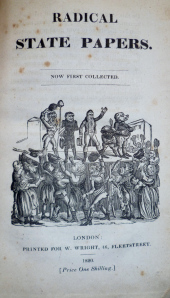
New Resource Added: Illustrated Satirical Pamphlets of the Queen Caroline Affair

RIN member Mathew Crowther asks me to alert network members to the fact that he has created a small digital archive of material which is freely available via his wonderful blog, https://theprintshopwindow.wordpress.com.

It contains copies of the illustrated portions of some of the rarer satirical pamphlets in his collection which were published during the Queen Caroline affair of 1820-1. A number of these items are not even listed on COPAC, so it is very likely that this is the only online archive of such material.

Find it at:

https://theprintshopwindow.wordpress.com/2014/04/05/the-print-shop-window-archive-of-satirical-pamphlets/

Radical Papers

New Resources added: Bibliography entries

RIN member Paul Barnaby, of the Walter Scott Digital Archive, had made the following suggestions for the RIN bibliography, which I’ve now added:

Garside, Peter. ‘Illustrating the Waverley Novels: Scott, Scotland, and the London Print Trade, 1819-1836’, The Library, 11 (2010), 168-96.

Garside, Peter. ‘Print Illustrations and the Cultural Materialism of Scott’s Waverley Novels’, in British Literature and Print Culture, ed. Sandro Jung (Cambridge: D. S. Brewer, 2013), pp. 125-57.

(This essay collection also has a chapter by Sandro Jung on illustrations of Thomson’s The Seasons in the 1790s.)

Hill, Richard. ‘The Illustration of the Waverley Novels: Scott and Popular Illustrated Fiction’, Scottish Literary Review, 1.1 (2009), 69-88.

Hill, Richard. Picturing Scotland through the Waverley Novels: Walter Scott and the Origins of the Victorian Illustrated Novel. (Farnham: Ashgate, 2010)

Westover, Paul. ‘Illustration, Historicism, and Travel: The Legacy of Sir Walter Scott’, in Necromanticism: Traveling to Meet the Dead, 1750-1860 (Basingstoke; New York: Palgrave Macmillan, 2012), pp. 142-73.

If you have any suggestions for texts we should include on the Bibliography page, or would like us to add your book or article, please email me at Mary.Shannon@roehampton.ac.uk.

New Resource Added: Walter Scott Illustrations

The following resources were suggested by Paul Barnaby, Project Officer for the Walter Scott Digital Archive, which draws upon the collections of Edinburgh University Library.

1) Walter Scott Image Collection (Paul Barnaby):

http://www.walterscott.lib.ed.ac.uk/imdata.html

This is an image library of just over 1000 illustrations to the works of Walter Scott and other Scott-related publications. It is part of a larger site, the Walter Scott Digital Archive.

2) Illustrating Scott: A Database of Printed Illustrations to the Waverley Novels, 1814-1901 (Peter Garside and Ruth McAdams):

http://illustratingscott.lib.ed.ac.uk/


Romantic Circles Gallery of Romantic Visual Culture

Theresa Kelley and Richard C. Sha forward a link to their Romantic Circles Gallery of Romantic Visual Culture (see below). They say:

‘If anyone has interest in pulling together an exhibition of roughly ten images into an exhibit, please send us a proposal. The following link shows what we already have:

http://www.rc.umd.edu/gallery/exhibits

Here is the rationale for the gallery:

http://www.rc.umd.edu/gallery/about ‘

For further information, contact

Richard C. Sha [rcsha@american.edu] or Theresa Kelly ‎[tkelley@wisc.edu]‎