Schools

"The Second of The Three Spirits" or "Scrooge's third Visitor" John Leech 1843 Steel engraving, hand-coloured 12.2 cm x 8.3 cm vignetted Fifth illustration in A Christmas Carol (London: Chapman and Hall, 1843), facing p. 78. The fifth illustration is John Leech's introduction to literature of that "pre-Father Christmas" figure, the Spirit of Christmas Present, not quite sitting on a "couch" or "kind of throne" (77), but decidedly "a jolly Giant, glorious to see; who [bears] a glowing torch, in shape not unlike Plenty's horn" (77). http://www.victorianweb.org/art/illustration/carol/5.html Scanned image and text by Philip V. Allingham.

“The Second of The Three Spirits” or “Scrooge’s third Visitor”
John Leech
1843
Steel engraving, hand-coloured
12.2 cm x 8.3 cm vignetted
Fifth illustration in A Christmas Carol (London: Chapman and Hall, 1843), facing p. 78.
The fifth illustration is John Leech’s introduction to literature of that “pre-Father Christmas” figure, the Spirit of Christmas Present, not quite sitting on a “couch” or “kind of throne” (77), but decidedly “a jolly Giant, glorious to see; who [bears] a glowing torch, in shape not unlike Plenty’s horn” (77). http://www.victorianweb.org/art/illustration/carol/5.html
Scanned image and text by Philip V. Allingham.

Romantic Illustration Network

Educational Workshop on Charles Dickens’s A Christmas Carol

UnivRoehamptonlogo

house-of-illustration-logo-kids-in-the-halls-column-arts-agency

‘Inventing Christmas: Dickens and Illustration’

in partnership with the House of Illustration and Y8 pupils from the Elizabeth Garrett Anderson School

December 3rd, 2015

This project brings together scholary expertise from the University of Roehampton, and curators and practitioners from the House of Illustration, to develop the public impact of the Romantic Illustration Network.
   

Recent Posts

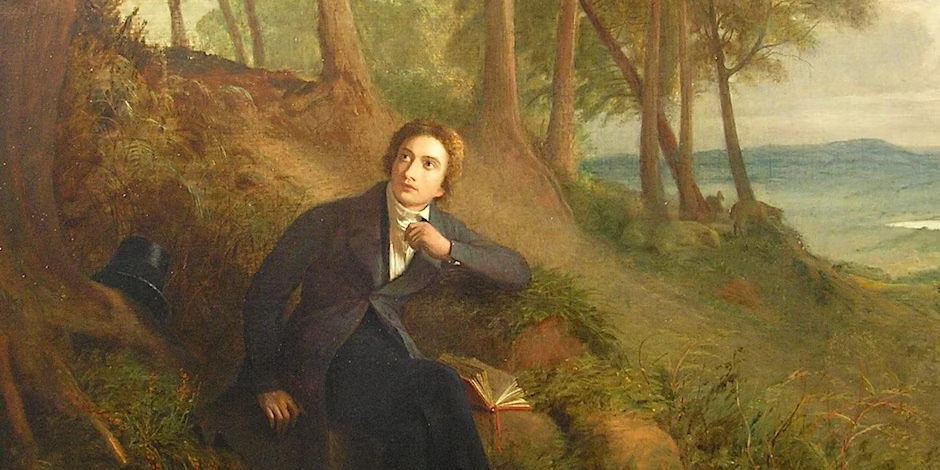
Event Announcement! Join Professor Ian Haywood for his talk on Keats and LSD

 (SPOILER ALERT – it’s not the type you think!)

This talk will take a fresh look at one of Keats’s best-known and well-loved poems, ‘On First Looking Into Chapman’s Homer’ (1816). This sonnet, first published in Leigh Hunt’s ‘The Examiner’, marked Keats’s debut as an aspiring poet, and critics have universally praised the poem’s celebration of the joys of reading the classics in translation. Keats was from a humble ‘Cockney’ background and this poem’s frank confession of his literary ambitions and educational limitations is widely admired as a display of Romantic sensibility. However, the perspective of LSD (spoiler alert – it is not what you think) produces a very different interpretation of the poem, and takes us into challenging cultural, geographical and ethical regions, with some profound implications for British Romanticism as a whole. Join Professor Ian Haywood to learn more.

Thu, 27 Mar 2025 18:30 – 20:00 GMT

Keats House10 Keats Grove London NW3 2RR

To book tickets and for more information, please visit: https://www.eventbrite.co.uk/e/keats-and-lsd-tickets-1205517889459

  1. Discovering the Legacy of the the Boydell Shakespeare Prints: A Collector’s Experience Leave a reply
  2. REVIEW: The History of Press Graphics 1819-1921: The Golden Age of Graphic Journalism by Alexander Roob. Reviewed by Katie Snow. Leave a reply
  3. Women Printmakers in the Eighteenth Century: exploring the print and publishing life of Letitia Byrne in Women in Print Leave a reply
  4. “With feelings which I cannot describe”: How Illustrators of Fin-de-Siècle Romance Fiction Depicted Wonders Surpassing Human Description Leave a reply
  5. Printed Afterlives: Joshua Reynolds’ ‘Johnson Arguing’ portrait, 1769 Leave a reply
  6. Introduction, Twitter launch and Call for Contributions 1 Reply
  7. Queen Caroline in Caricature – August 1821 1 Reply
  8. Roehampton Research Seminar, 9 December 2020 1-2pm 1 Reply
  9. Queen Caroline in Caricature -November 1820 2 Replies